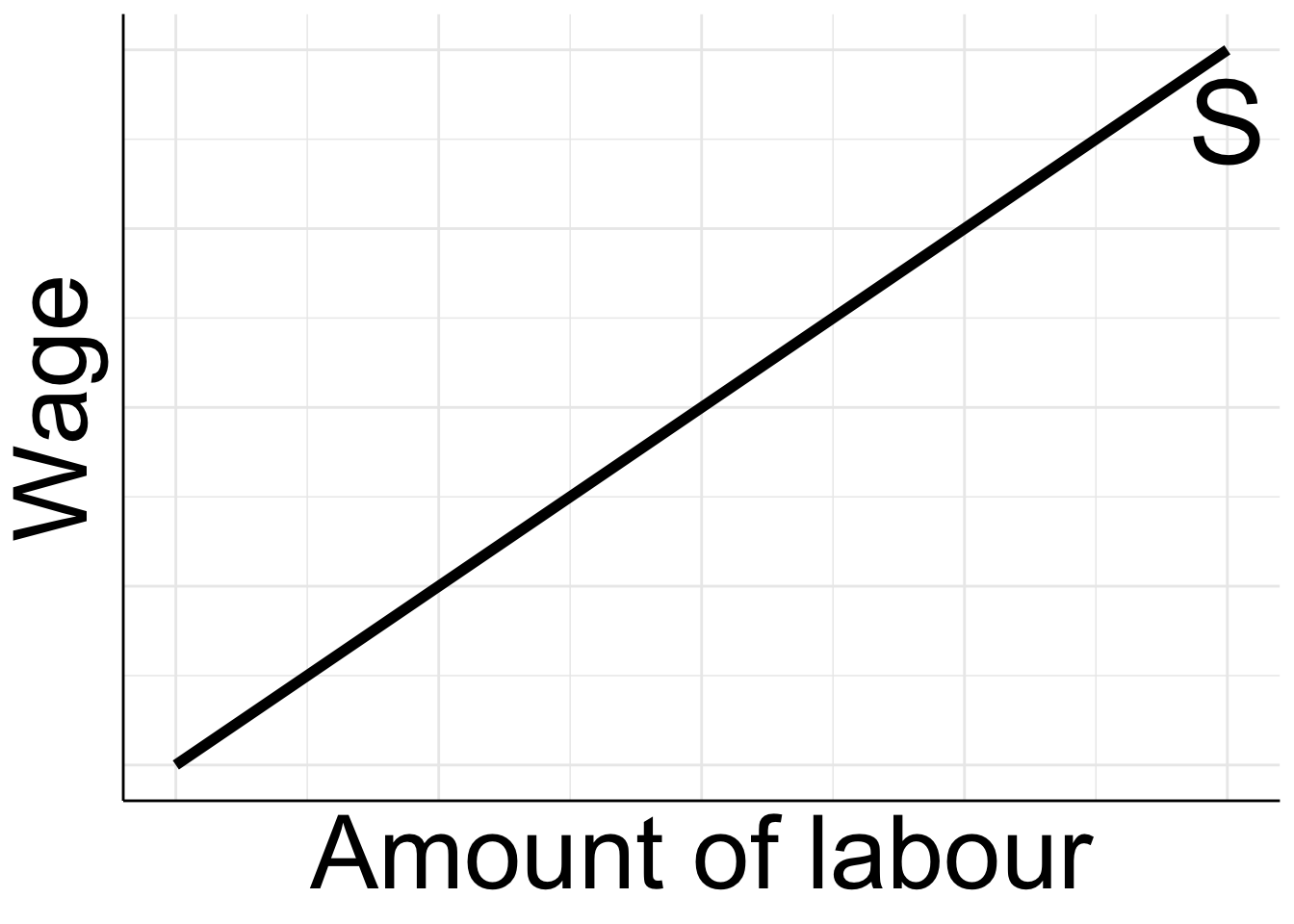
1. Introduction to Labour Economics

KAT.TAL.322 Advanced Course in Labour Economics

Nurfatima Jandarova

August 25, 2025

Course structure

Instructor: Nurfatima Jandarova (nurfatima.jandarova@tuni.fi)

Classes: 90 min lectures twice a week:

  • Mon 12:00 - 14:00
  • Wed 10:00 - 12:00

Check classrooms on Sisu calendar!

10 lectures + 2-3 classes devoted to final assessment

All course information on Moodle

No office hours (contact by email)

Final assessment

20 min presentation of a research proposal

  • Individual or in groups of 2-3 students

  • Topic related to labour economics

    • Reading list is a good place to start
    • Recent literature surveys (e.g., Journal of Economic Literature)
    • Opinion columns (e.g., VoxEU)
    • Labour economics \(\equiv\) everyday life

Important

Form groups and choose topic by 12 September!

Requirements to research proposals

Research question and relevance

  • A very specific research question

    Vague

    How benefits affect students?

    Specific

    How does the transition from housing allowance to housing supplement affect graduation timing of students?

  • Important for overall society

    • How answering your research question can improve our lives?
  • Aims at novel evidence and understanding of the problem

    • The question may be “old”, but studied from a new angle

Requirements to research proposals

Main body

Theoretical model

  • Clear exposition of model
  • Comparative statics/predictions
  • ⭐ Plan for testing with the data

Empirical strategy

  • Potential dataset (sample, variables)
  • Estimation method (challenges, assumptions)
  • ⭐ Interpret through the lens of model

Tip

Find a paper with similar model or method and follow their logic.

Useful resources

  • How to apply economics to everyday questions


  • Not about giving correct answers!

Labour Economics

What is Labour Economics?

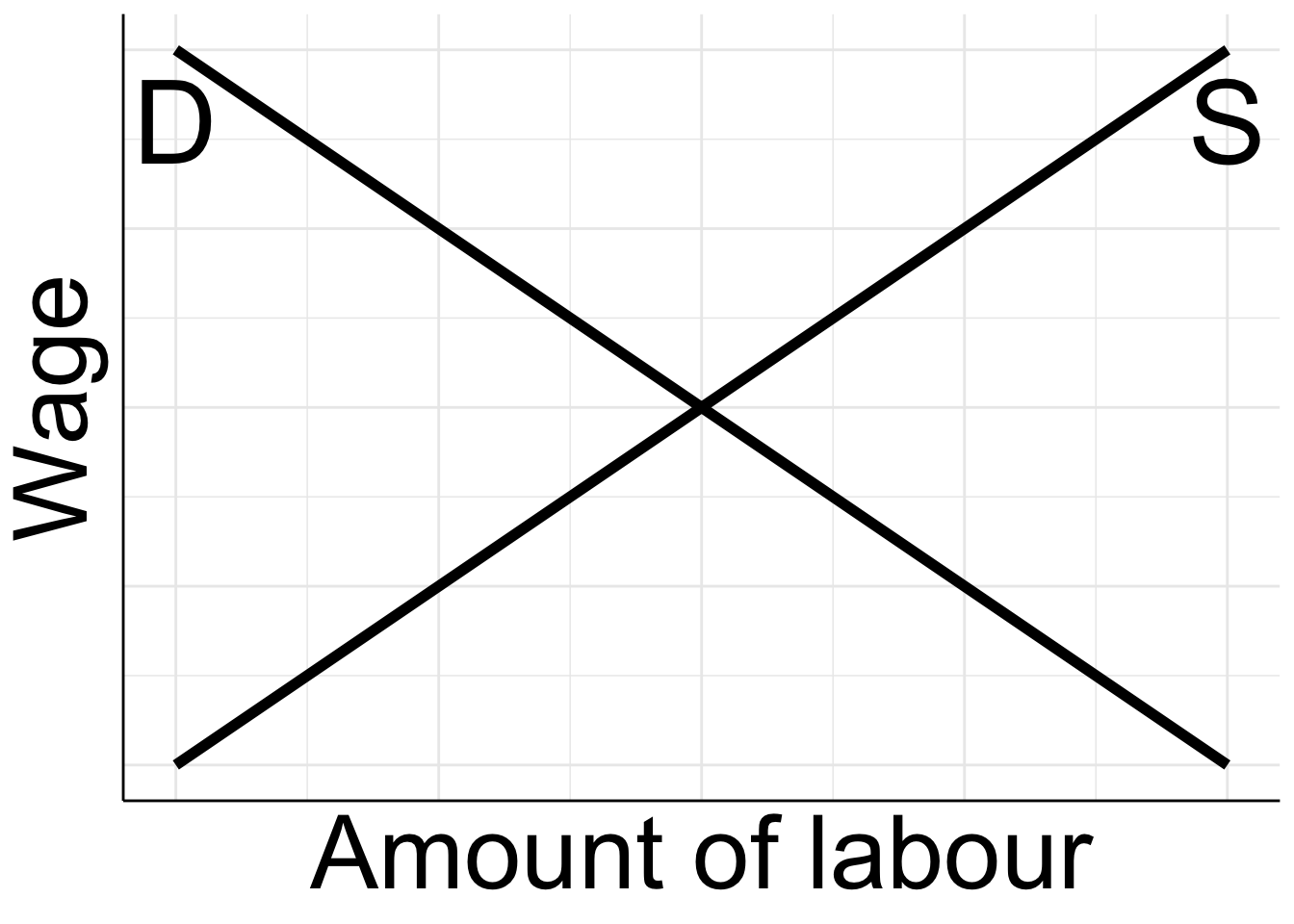
Labour economics studies how labour markets work.

Main actors in the labour market:

  • workers (sellers)

  • firms (buyers)

  • government

Why study Labour Economics?

Labour market is the largest market

  • Work accounts for ~30% of waking hours
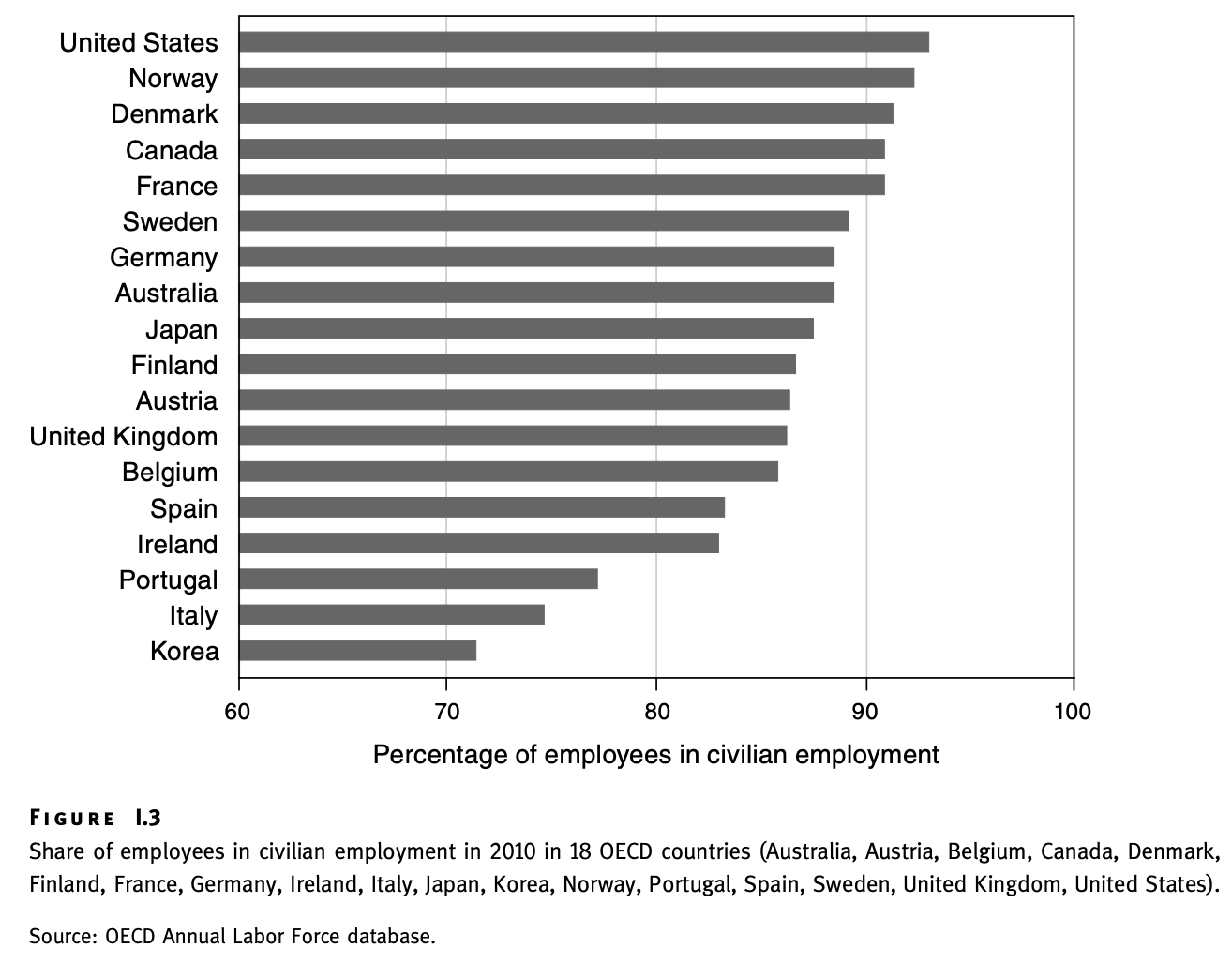
  • Employees account for 70-90% of employment
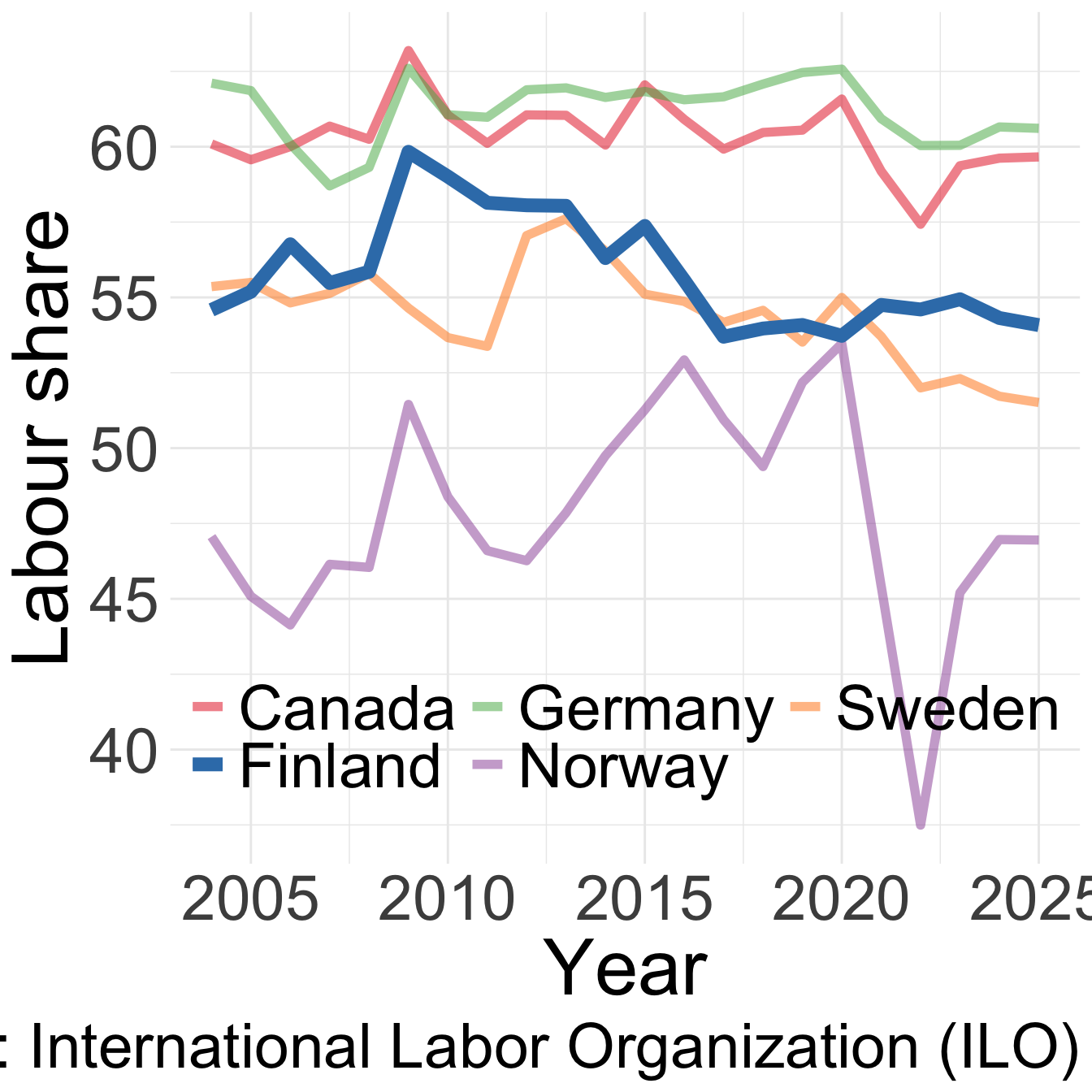
  • Labour income accounts for ~60% of total output
Time spent working

Source: Cahuc (2004)

Labour share in GDP

Positive vs Normative Economics (do vs should)

Positive economics

How do markets work?

Examples:

  • does minimum wage affect employment?
  • does AI affect labour demand?
  • does tuition fee affect college decision?

Normative economics

How should markets work?

Examples:

  • should the minimum wages be abolished?
  • should AI firms compensate laid off workers?
  • should tuition be financed by loans or grants?

Topics in labour economics

Selected topics

  • Models of labour supply and demand

  • Job search and wage setting

  • Investments into human capital

  • Technological advances

  • Gender inequality

  • Intergenerational mobility

Other topics

  • Migration

  • Trade unions

  • Taxes and welfare state

  • Labour markets and economic growth

Example: labour supply

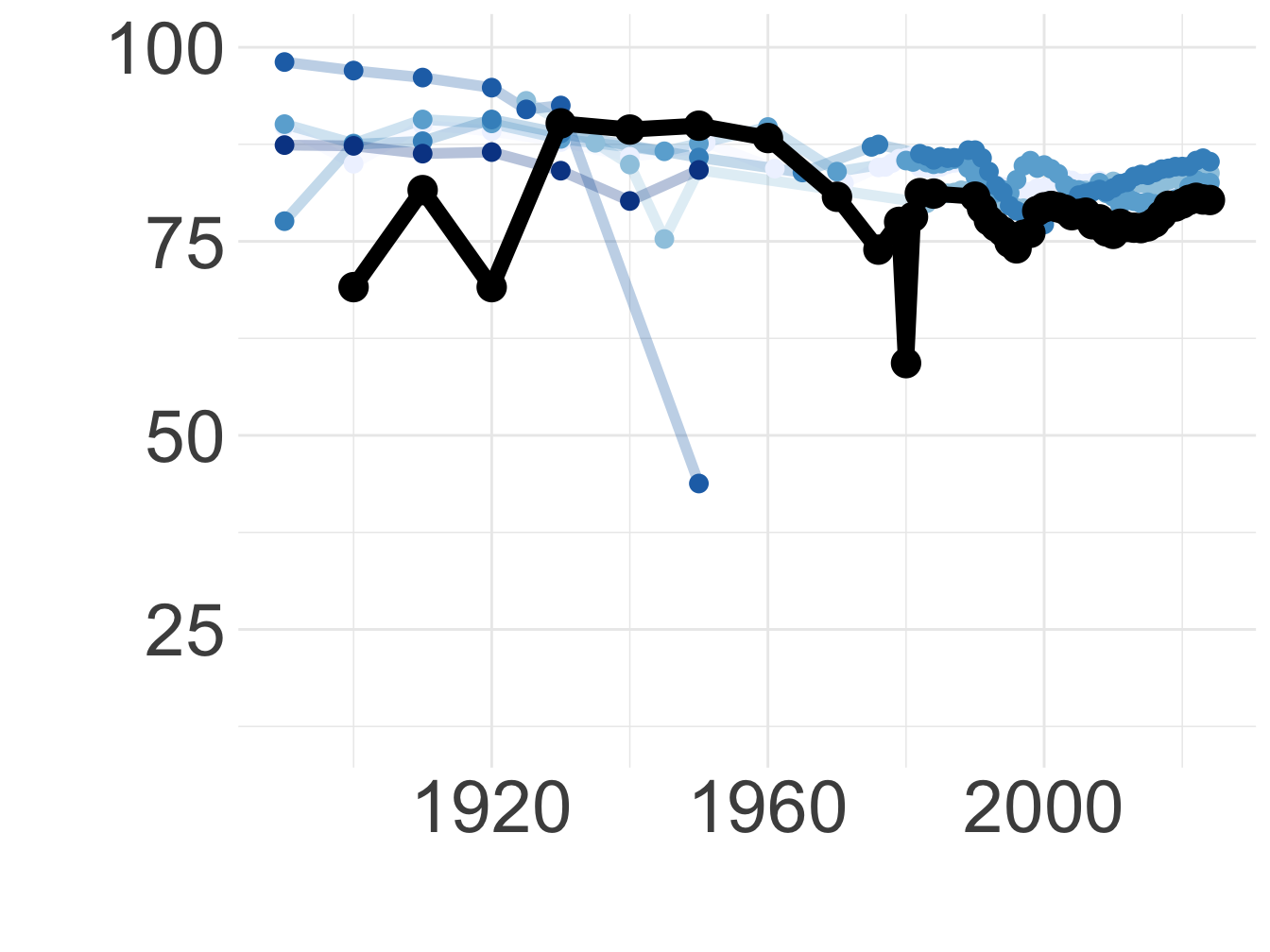
Female labour force participation
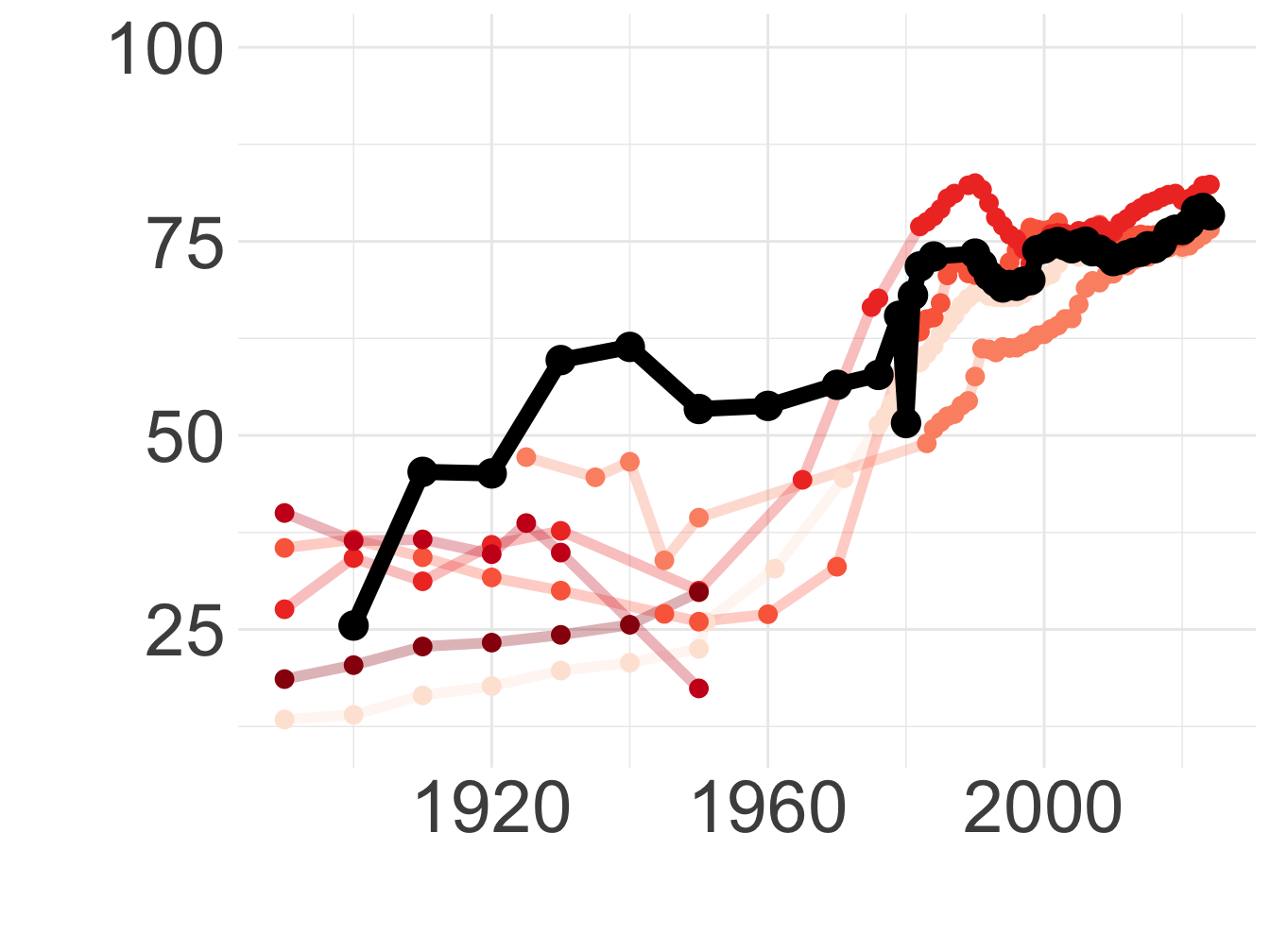
Female

Male
Countries plotted: Canada, Germany, Finland, Norway, Sweden, United Kingdom, United States
Source: International Labor Organization (ILO) and Olivetti (2013)

Example: labour demand

Computerisation and automation
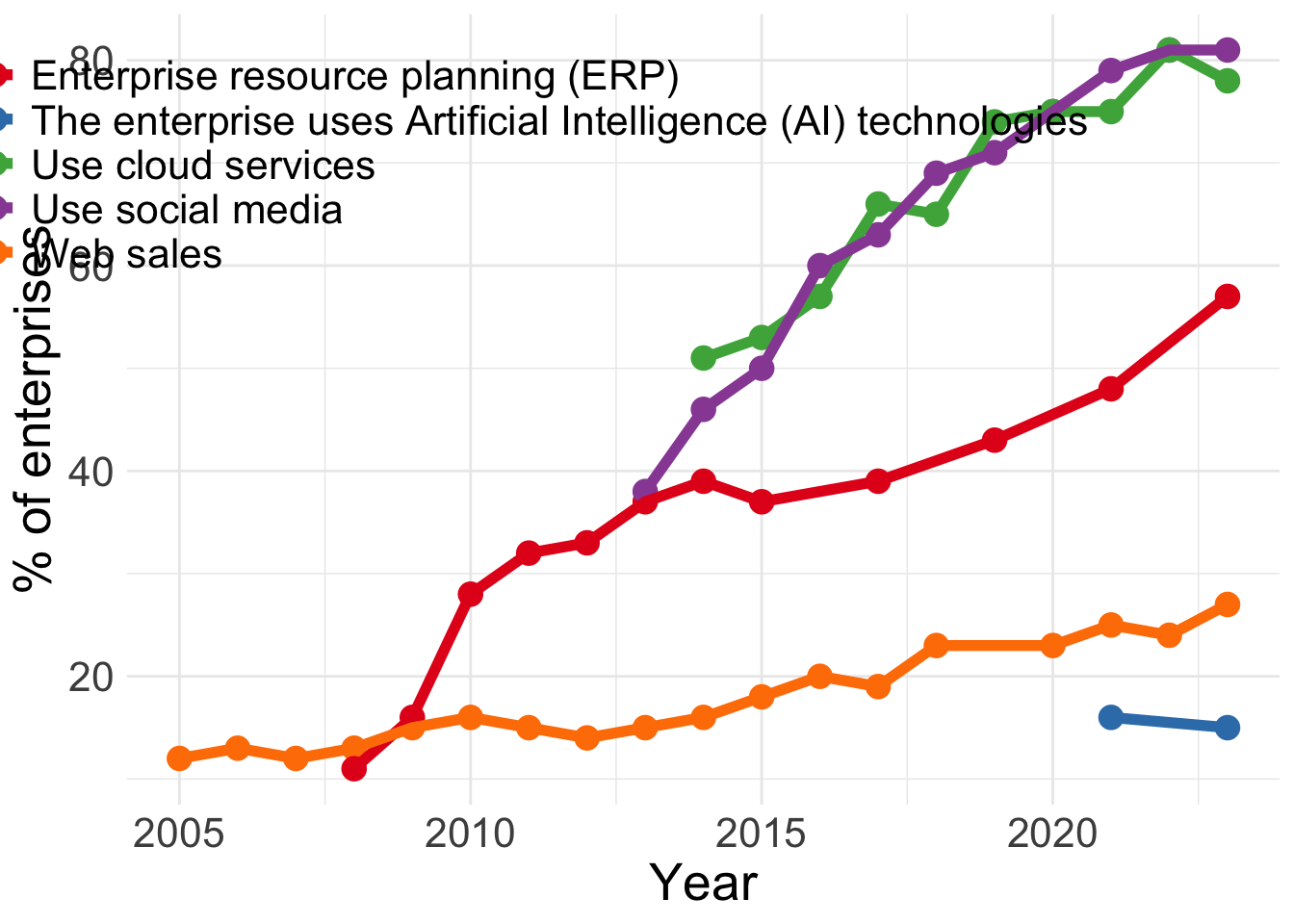
Digitization of workplaces in Finland

Source: Statistics Finland (2024)

Example: labour demand

50% of jobs face high risk of computerisation

Source: Frey and Osborne (2017)

Example: employment

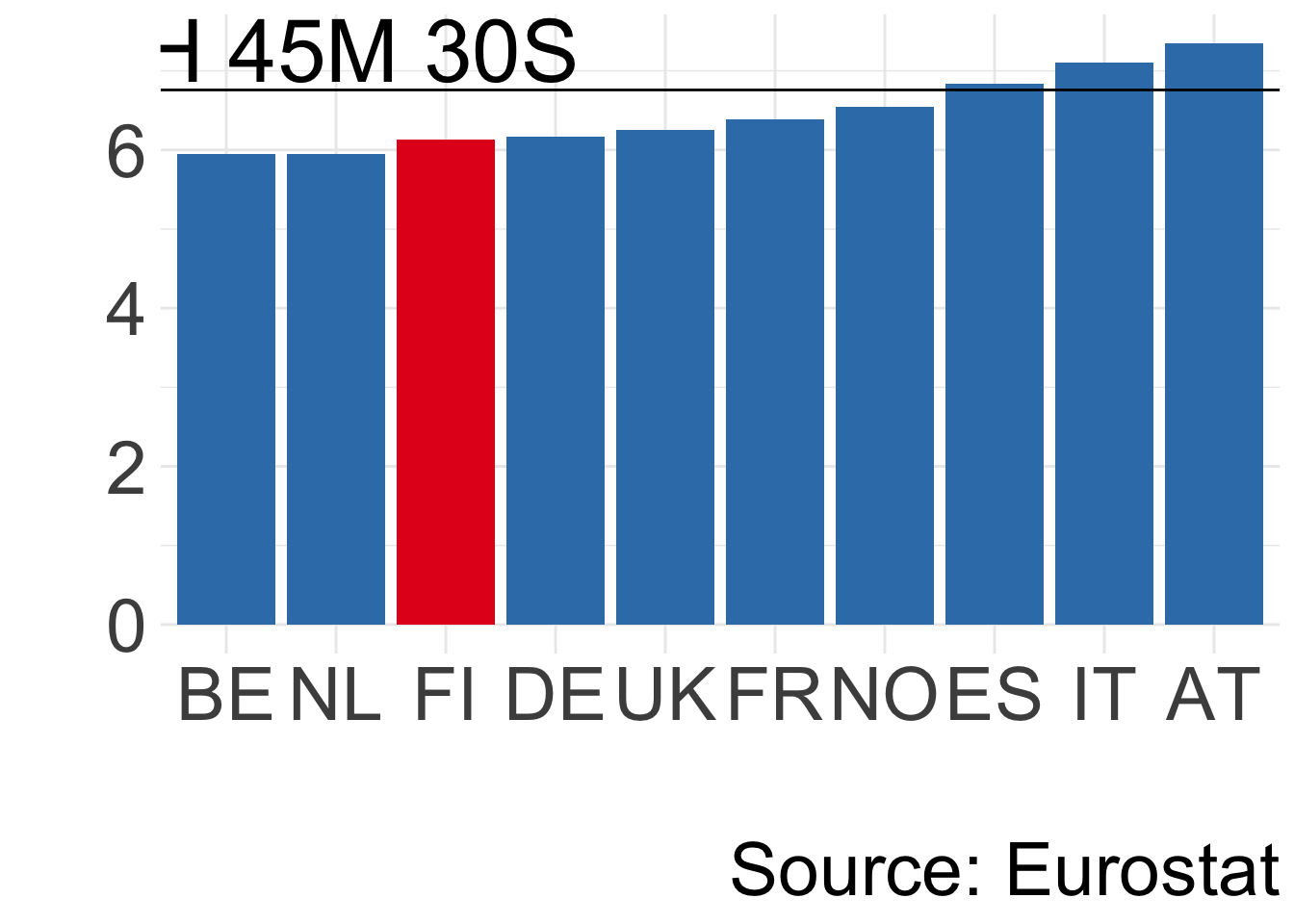
Minimum wages
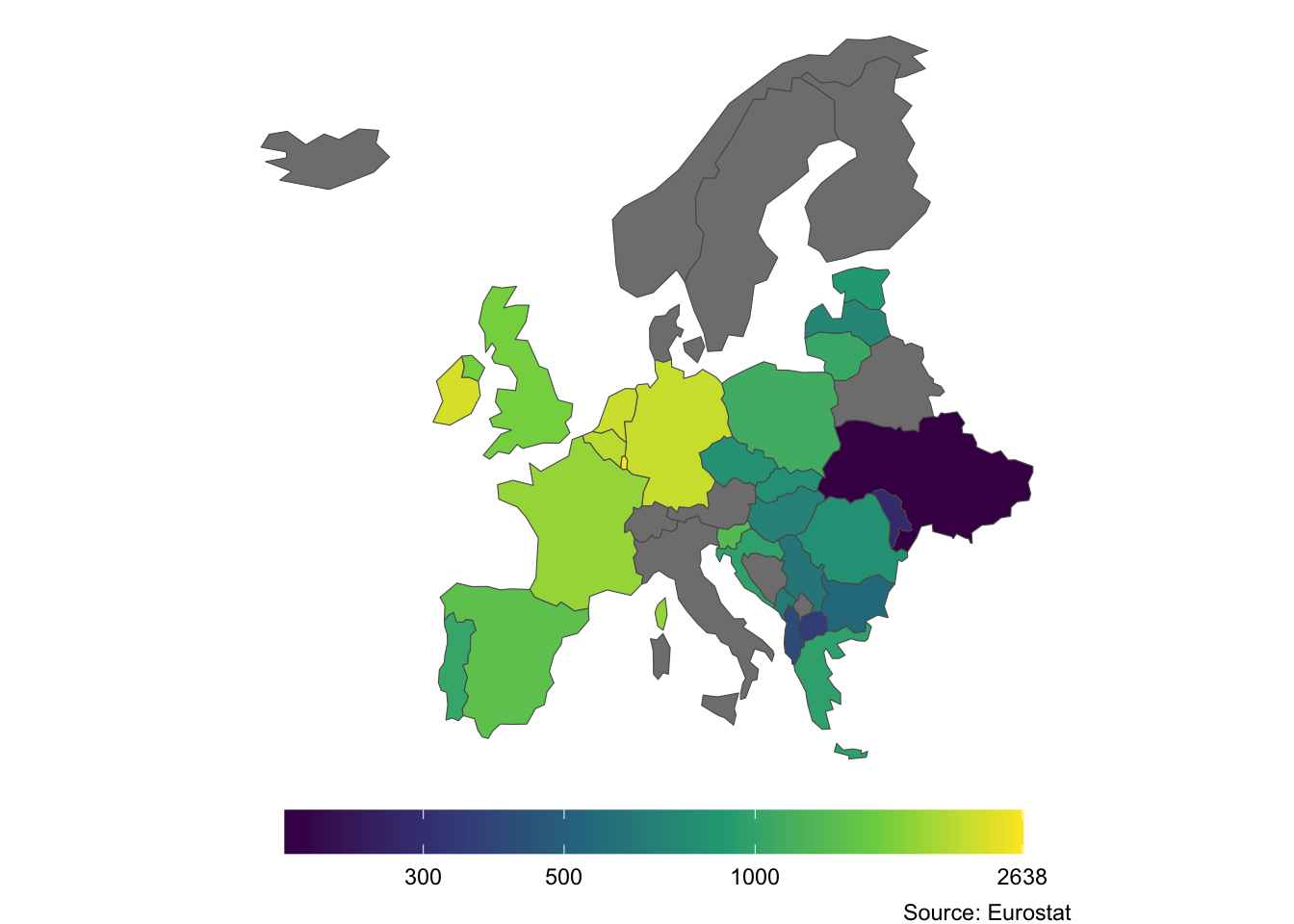
Source: Eurostat

Example: human capital

University expansion
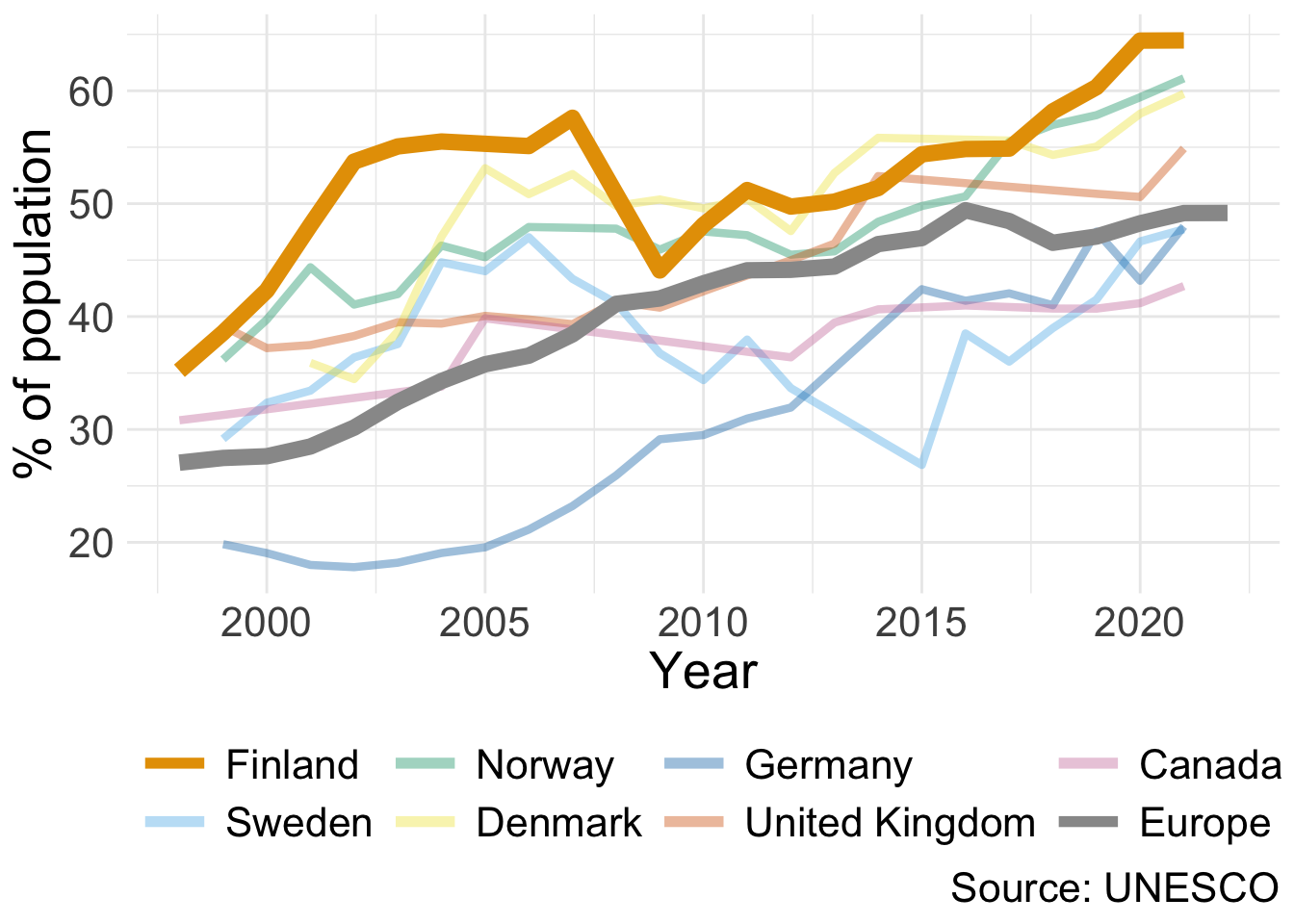
Higher education graduates

Example: inequality
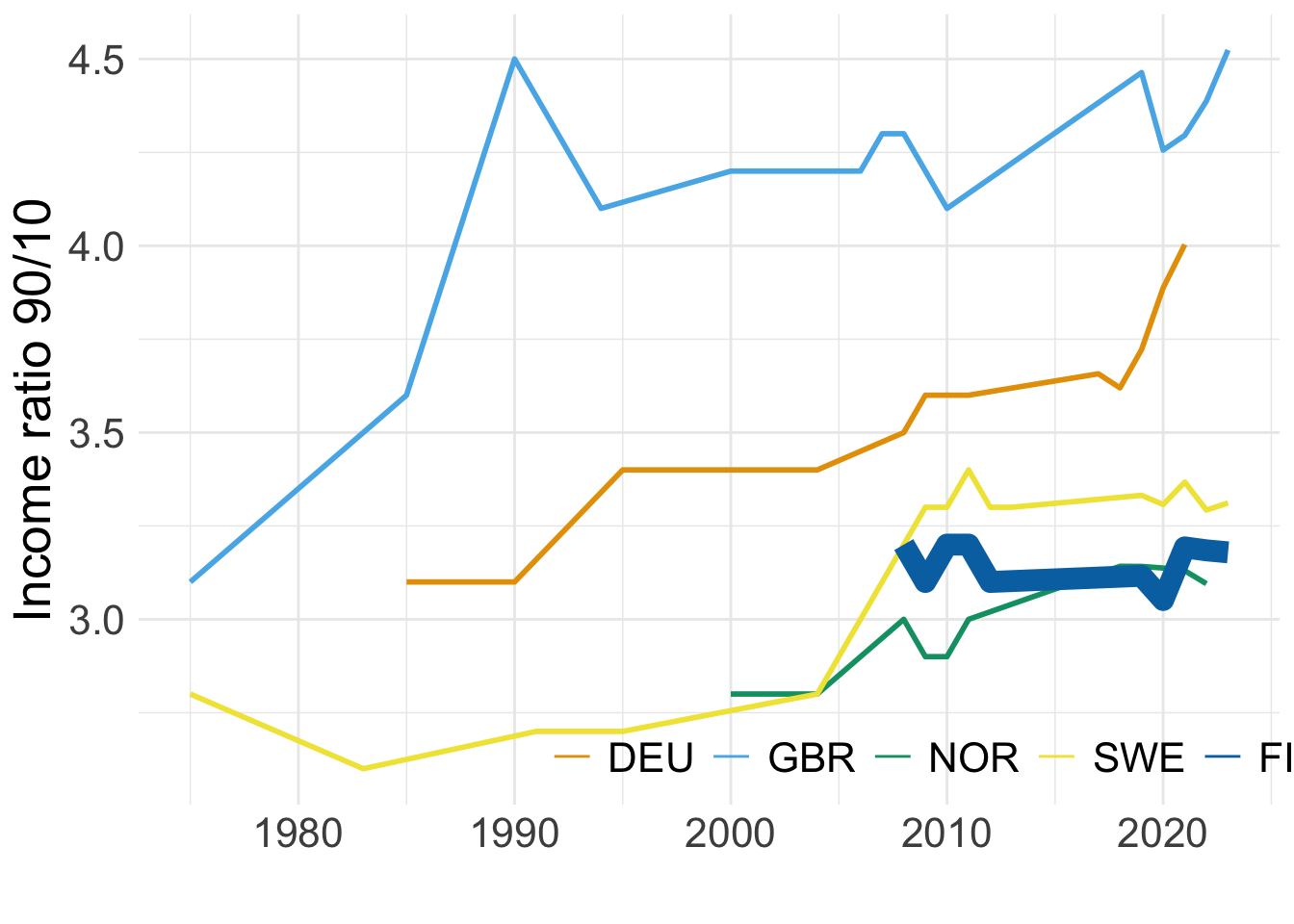
Source: OECD

Also labour economics topics

Carlana (2019) Implicit Stereotypes: Evidence from Teachers’ Gender Bias

“Teacher stereotypes induce girls to underperform in math”

Doepke and Zilibotti (2019) Love, Money and Parenting

“how economic forces and growing inequality shape how parents raise their children”

Oswald and Powdthavee (2008) Does happiness adapt? A longitudinal study of disability with implications for economists and judges

“people who become disabled go on to exhibit considerable recovery in mental well-being”

Adams-Prassl et al. (2023) The Dynamics of Abusive Relationships

“labor market consequences of cohabiting with an abusive spouse”

Overview of lectures

Aug
25
Introduction to Labour Economics
Aug
27
Labour Supply
Sep
1
Labour Demand
Sep
3
Job Search
Sep
8
Wage setting
Sep
10
Human Capital
Sep
15
Education Quality
Sep
17
Technological shift and labour markets
Sep
22
Labour market discrimination
Sep
24
Intergenerational mobility

References

Adams-Prassl, Kristiina Huttunen, Emily Nix, and Ning Zhang. 2023. “The Dynamics of Abusive Relationships.” Working Paper. Minneapolis, MN, USA. April 2023. https://doi.org/10.21034/iwp.71.
Cahuc, Pierre. 2004. Labor Economics. Cambridge (Mass.): MIT Press.
Carlana, Michela. 2019. “Implicit Stereotypes: Evidence from TeachersGender Bias*.” The Quarterly Journal of Economics 134 (3): 1163–1224. https://doi.org/10.1093/qje/qjz008.
Doepke, Matthias, and Fabrizio Zilibotti. 2019. Love, Money, and Parenting: How Economics Explains the Way We Raise Our Kids. Princeton University Press.
Frey, Carl Benedikt, and Michael A. Osborne. 2017. “The Future of Employment: How Susceptible Are Jobs to Computerisation?” Technological Forecasting and Social Change 114 (January): 254–80. https://doi.org/10.1016/j.techfore.2016.08.019.
Olivetti, Claudia. 2013. “The Female Labor Force and Long-run Development: The American Experience in Comparative Perspective∗.” November 2013. https://www.bu.edu/econ/files/2012/11/olivetti_chapter_November2013_complete.pdf.
Oswald, Andrew J., and Nattavudh Powdthavee. 2008. “Does Happiness Adapt? A Longitudinal Study of Disability with Implications for Economists and Judges.” Journal of Public Economics 92 (5): 1061–77. https://doi.org/10.1016/j.jpubeco.2008.01.002.
Statistics Finland. 2024. “Use of Information Technology in Enterprises by Year, Size Category of Personnel and Information.” https://statfin.stat.fi/PXWeb/api/v1/en/StatFin/icte/statfin_icte_pxt_13vg.px.